Booking choice: The small-group Chianti tour, from $98 per person. Check dates Tour details
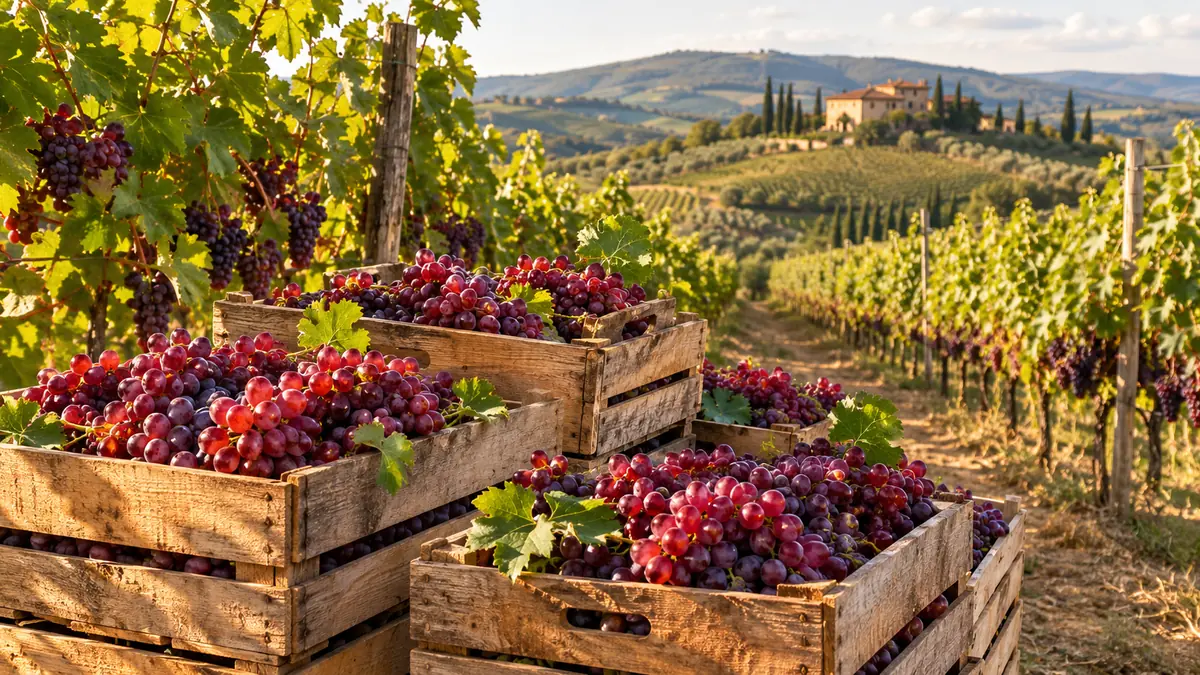
The vendemmia is the busiest few weeks of the Tuscan year. Tractors pull trailers of crates along the Chiantigiana, cellar doors stay open late, and the air around every winery smells of crushed fruit. For a visitor it is also the most photogenic moment to be in the hills.
This post covers the 2026 harvest as growers and the wine consortia described it, what the smaller crop means, and how a day tour from Florence changes when the estates are picking.
The quick answer
Sangiovese in Chianti Classico and Montalcino is normally picked from late September into early October. In 2026 a hot summer pushed things forward: Montalcino started in early September and many estates were five days to two weeks ahead. Yields were cut on purpose for Brunello, Chianti Classico and Chianti. Tours run as normal in harvest weeks, with busier cellars and fermentation tanks in full swing.
When is the grape harvest in Chianti Classico and Montalcino?
In a normal year, from about the third week of September to mid October for Sangiovese. In 2026 it started earlier, with Montalcino picking from early September.
The Consorzio Vino Chianti Classico gives the textbook calendar: budding in April, flowering in late May, veraison (when the grapes turn colour) in late August, and ripening from the third ten days of September to the second ten days of October. In 2023, a year it calls a return to traditional timing, Sangiovese picking began around 20 September and ended in the first ten days of October.
2026 did not follow the textbook. Coldiretti Toscana put most vineyards in the region five to seven days ahead by mid August, with parts of the Maremma two weeks early. In late August the Chianti Classico consortium reported that only a few early-ripening varieties had been picked and the Sangiovese was still on the vine. Brunello consortium president Giacomo Bartolommei said picking for Brunello would begin within about ten days, which put it in early September.
Some estates went even earlier. Tenuta Luce in Montalcino started on 26 August and brought in its last grapes, Cabernet Sauvignon, on 5 October. Growers in Castellina and Panzano described themselves as about ten days ahead.
| Zone | Usual Sangiovese harvest | 2026 |
|---|---|---|
| Chianti Classico | Late September to mid October | Roughly 1 to 2 weeks early; Sangiovese still unpicked in late August |
| Montalcino (Brunello) | Mid September to early October | From early September; Tenuta Luce picked 26 Aug to 5 Oct |
| Montepulciano (Vino Nobile) | Late September | Expected from the second week of September |
| San Gimignano (Vernaccia) | September | About a week early, but not before September |
How did the 2026 harvest go in Tuscany?
Healthy grapes, smaller berries and less wine. A wet winter filled the soils, then a hot summer stressed the hillsides until rain cooled things in mid September.
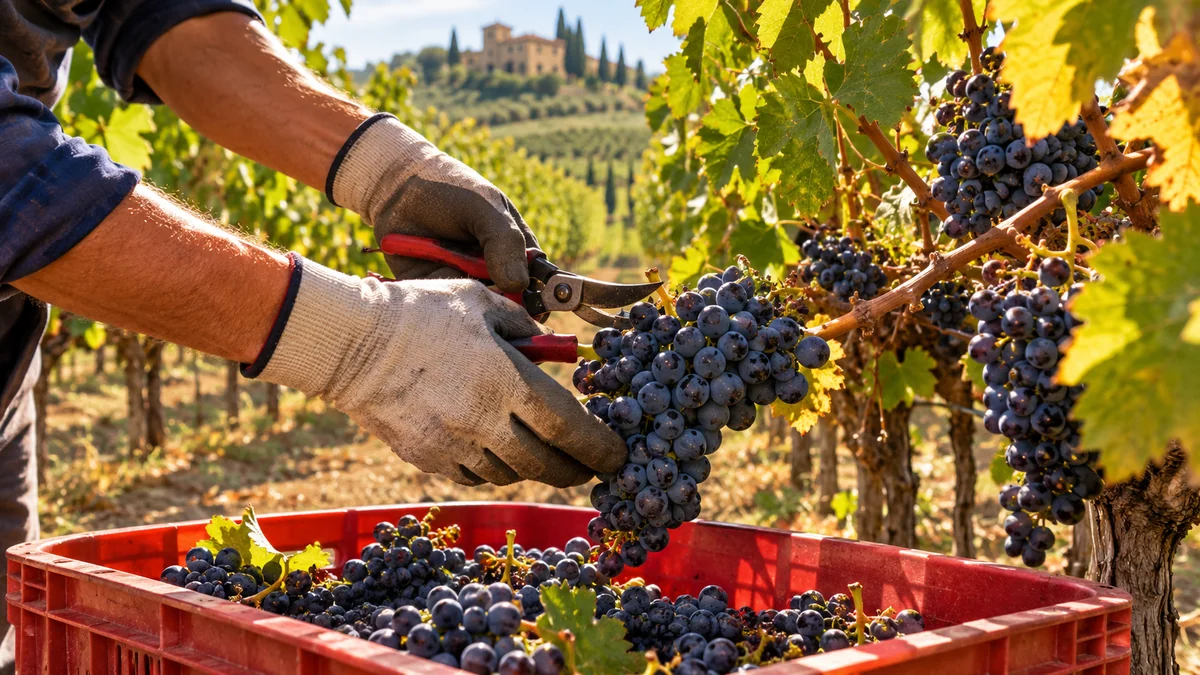
The season started well. A mild, rainy winter and spring rebuilt water reserves, and the vines woke up early. Then came the heat. June 2026 was reported as the second-warmest June on record in Europe, and July and August were dry. Higher parts of the Chianti Fiorentino got very little rain, and the Valvirginio cooperative near Florence expected 10 to 15% less wine than in 2025.
Disease was barely an issue. Producers across the region reported clean fruit, and the main complaint was berry weight: small grapes, thick skins, less juice. In Montalcino, rain and cooler temperatures in mid September gave the late Sangiovese a break during the final ripening. Bartolommei's forecast for Brunello was lower volume and very high quality.
The Chianti Classico consortium has yet to publish its official 2026 vintage write-up, and real verdicts come from the bottle, not from August press releases. Small, concentrated crops from hot years tend to make powerful wines. Expect ripe fruit and some high alcohol levels.
Why are there fewer grapes in 2026?
Partly the heat, mostly a decision. The consortia asked for lower permitted yields to keep stocks and prices in check, and the region approved them.
In May the Consorzio del Vino Brunello di Montalcino cut the maximum yield for Brunello from 80 to 70 quintals of grapes per hectare for the 2026 harvest. In August the Tuscan regional government approved yield reductions requested by the consortia for four denominations: Brunello di Montalcino, Chianti Classico, Chianti and Toscana IGT, plus rules on handling any surplus.
The reason is the market, not the weather. Wine consumption is soft, cellars hold plenty of unsold stock, and Brunello trades on scarcity. For visitors none of this changes a tasting today: you drink wines from older vintages, and the cellar doors are just as open.
It does set the clock for when you can taste 2026. Brunello goes on sale on 1 January of the fifth year after the harvest, which makes 1 January 2031 for Brunello 2026 and a year later for the Riserva. Chianti Classico Annata needs at least 12 months of ageing, so the first 2026 bottles appear from late 2027. Our guide to Chianti Classico versus Montalcino explains the styles.
| Wine | Minimum ageing | Earliest 2026 bottles |
|---|---|---|
| Chianti Classico Annata | 12 months | Late 2027 |
| Chianti Classico Riserva | 24 months, 3 in bottle | Late 2028 |
| Chianti Classico Gran Selezione | 30 months, 3 in bottle | 2029 |
| Brunello di Montalcino | Released 1 January, 5th year after harvest | 1 January 2031 |
| Brunello Riserva | Released 1 January, 6th year after harvest | 1 January 2032 |
How do wine tours change during harvest weeks?
Tours run as usual, but the cellars are working. You see crates arrive, smell the fermentation and sometimes taste must straight from the tank.
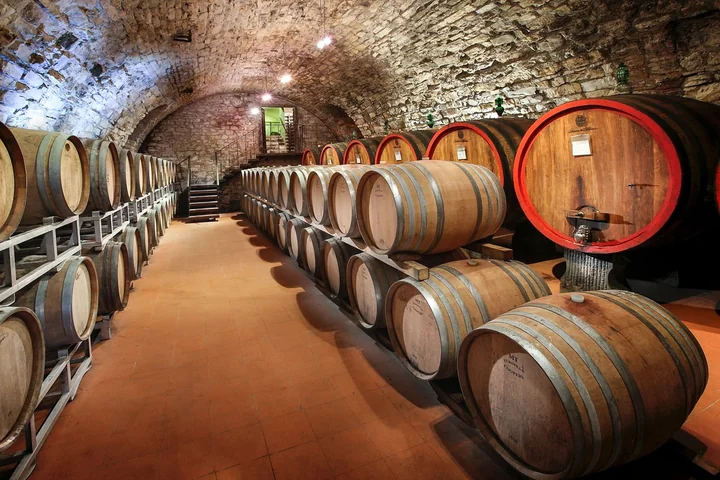
Harvest is a working season, so do not expect to be handed shears. Day tours from Florence do not include grape picking: estates use trained crews and insurance rules are strict. What you get instead is the cellar at its liveliest. Stainless steel tanks bubble with fermenting Sangiovese, the sorting table may be running, and the owner might walk in with purple hands.
Small family estates are the best place to see it. The small-group minibus tour visits two estates and pours six wines with oil, cheese and salami. On recent tours guests name Fattoria Montecchio among the stops; one guest who went in September 2026 wrote that it "was our favorite and we plan to order more from them in the future."
Expect a few small differences. Cellar visits can be shorter when a delivery arrives, roads are slower behind tractors, and some estates swap the barrel room for the fermentation room on the walk-through. In 2026 the Movimento Turismo del Vino Toscana ran its Cantine Aperte in Vendemmia open-cellar weekends from 24 August to 25 October, a sign of how much the wineries want visitors in this season.
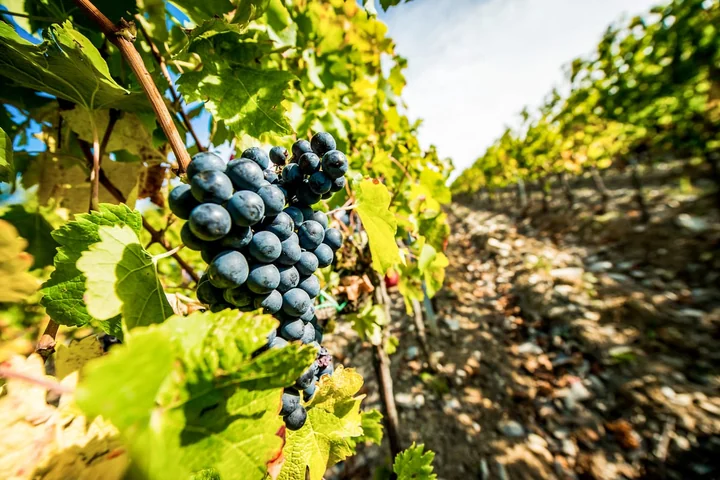
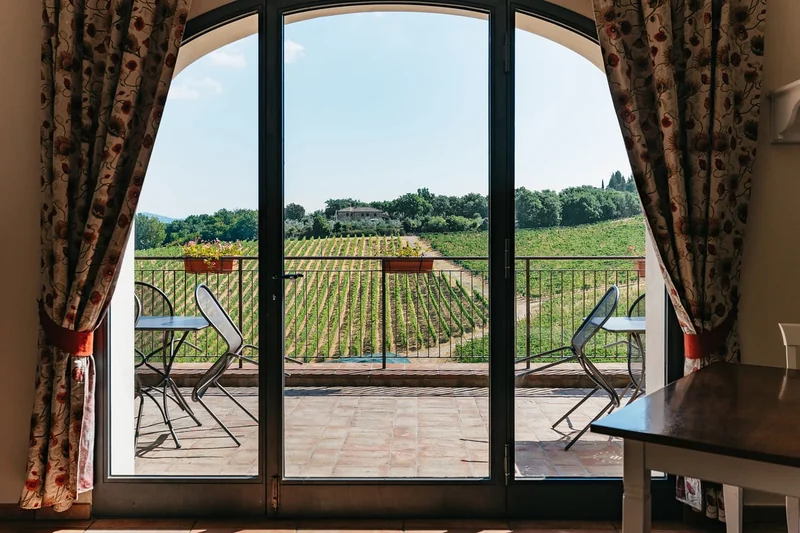
Two family estates by minibus, six wines with oil, cheese and salami. The easiest way to see a working cellar in September.
Explore the small-group Chianti tour Tour detailsShould you book a harvest wine tour next September?
Yes, if you can travel in September or early October. Book a few weeks ahead, because harvest weeks are also peak tour season.
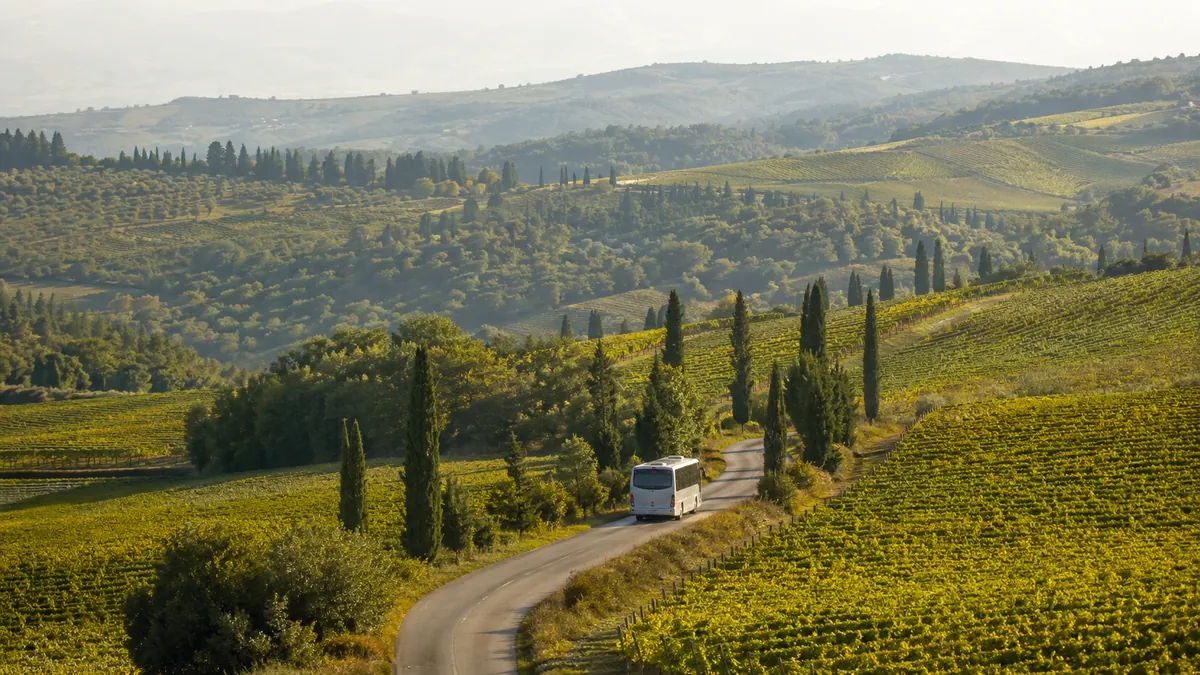
September and early October bring warm days, low sun on the vines and the harvest itself. They also bring full minibuses. Small-group departures with eight to 25 seats go first; the big coach tours have more room. Every tour on this site cancels for free up to 24 hours before, so booking early costs nothing if plans move.
Pick by the number of wineries, not the hours. For the full harvest picture, the full day with three wineries and lunch gives you more cellars and a long table. If you want the big southern reds while the Brunello estates are picking, the Val d'Orcia day visits a Brunello winery in Montalcino and a Vino Nobile winery in Montepulciano, in 11.5 hours. The best time for a Tuscany wine tour guide compares every month.
| Tour | Wineries | Length | From |
|---|---|---|---|
| Small-group Chianti tour | 2 estates, 6 wines | 4.5 h | $98 |
| Full day with lunch | 3 wineries | 7.5 to 8 h | $164 |
| San Gimignano minivan | 2 wineries, 8 wines | 7 h | $83 |
| Val d'Orcia, Brunello day | 2 wineries (Montalcino, Montepulciano) | 11.5 h | $81 |
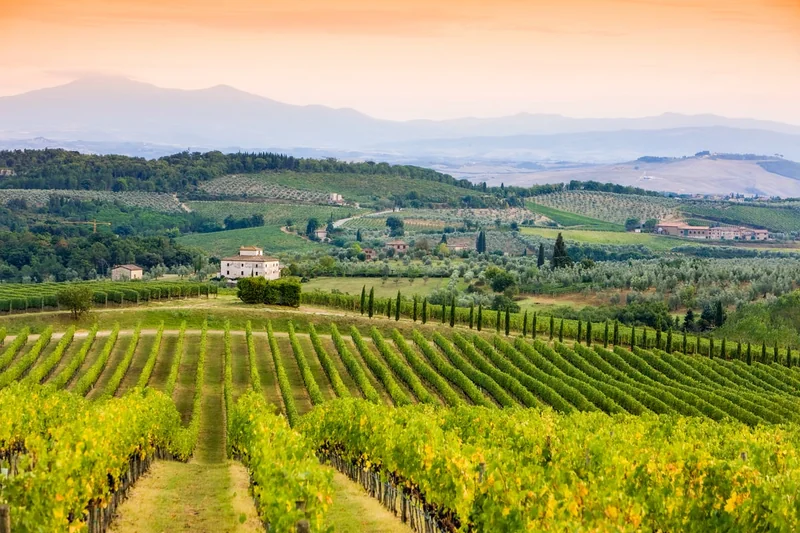
Three wineries, a long Tuscan lunch and free time in Greve, in a small group.
Check dates for the full day with lunchWhat happens in the vineyards after the harvest?
The new wine ferments and settles, the leaves turn red and yellow, and in late November Montalcino holds its new-release week.
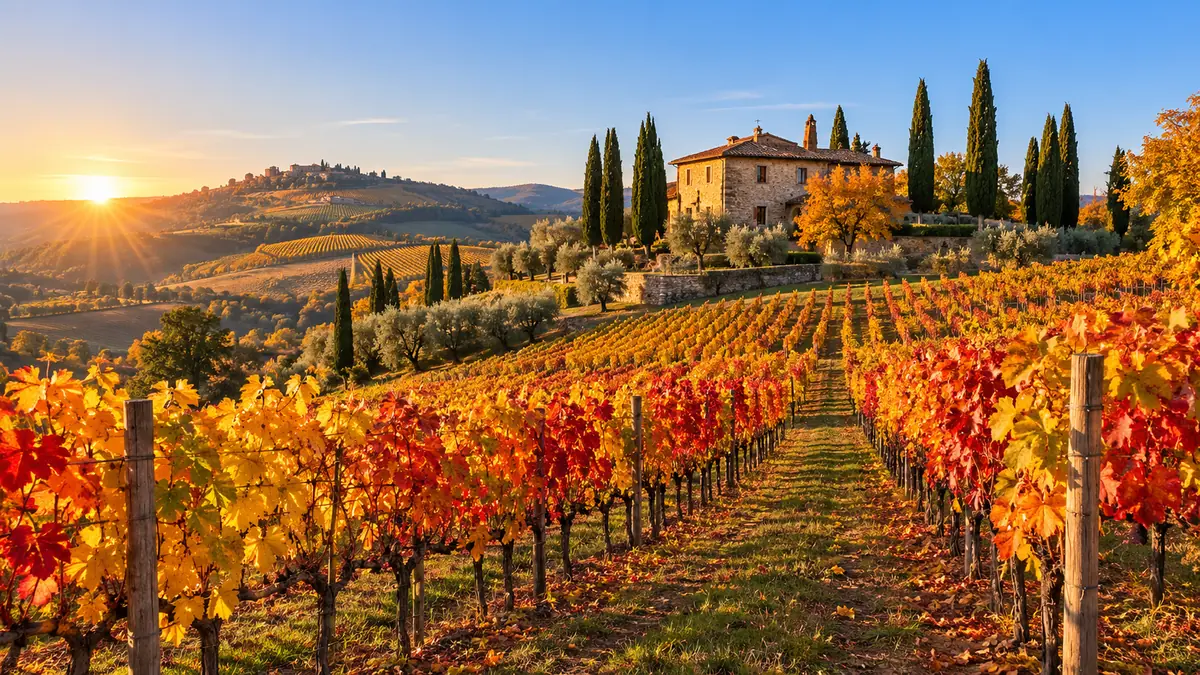
October is fermentation and pressing. By the second half of November the leaves fall, according to the Chianti Classico consortium's calendar, and the hills turn copper first. It is a quieter, cheaper time to visit, with olive mills running and new oil on the tasting tables.
Montalcino marks each vintage with a ceramic tile on the town hall wall, a tradition the Brunello consortium started in 1992. The 2026 tile was designed by Vespa, for the scooter's 80th anniversary, and is unveiled on 21 November during Benvenuto Brunello (19 to 23 November 2026). Read our winter touring guide for what runs from November to March.
Frequently asked questions
When is the grape harvest in Tuscany?
For Sangiovese, usually from late September to mid October in Chianti Classico and Montalcino. In 2026 it ran about one to two weeks early, with Brunello estates starting in early September.
Can tourists pick grapes during the Tuscan harvest?
Not on standard day tours. Estates pick with trained crews. A harvest-season tour shows you the cellar at work instead: arriving crates, sorting and fermentation tanks.
Is 2026 a good vintage for Chianti Classico and Brunello?
Early reports are positive: healthy grapes, small berries and lower volumes after a hot summer. The Brunello consortium president forecast very high quality. Official verdicts come once the wines are tasted.
When can I drink 2026 Brunello di Montalcino?
From 1 January 2031, the fifth year after the harvest. The Riserva follows on 1 January 2032. Chianti Classico 2026 reaches shops from late 2027.
Ready to book
Choose your tour
Free cancellation up to 24 hours before on every option. Prices are from-prices in USD and move with the season.
Small-Group Chianti Wine Tasting Tour
- Air-conditioned minibus from Piazzale Montelungo and back
- Driver-guide all day
- Guided visits to 2 wine estates in Chianti Classico
Full-Day Small-Group Wineries Tour with Lunch
- Air-conditioned vehicle with Wi-Fi
- English-speaking driver-guide
- Guided visits to 3 wineries with wine and olive oil tastings
Val d'Orcia Day with Brunello & Vino Nobile
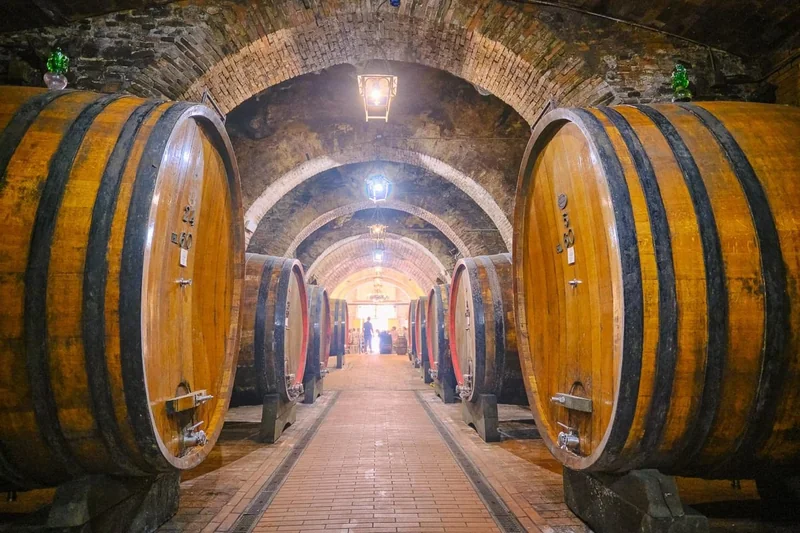
Brunello in Montalcino and Vino Nobile in Montepulciano, one long day