Booking choice: The small-group Chianti tour, from $98 per person. Check dates Tour details
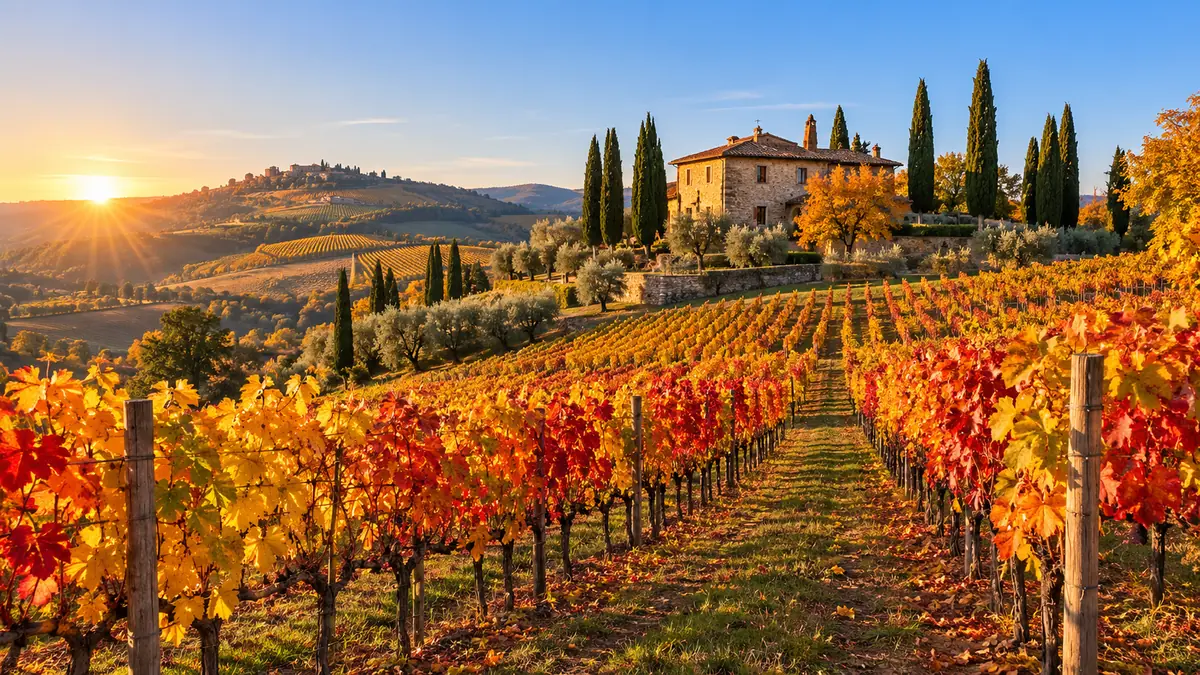
The best months for a Tuscany wine tour are May, June, September and October. The vines are green or heavy with fruit, the days are warm rather than hot, and the estates are in full swing. September and early October add the harvest, and the most crowded wine week of the year.
The weather figures below are 1991 to 2020 averages for Florence airport. The Chianti hills run a little cooler, especially the high villages around Radda.
The quick answer
Go in May, June, September or October. The Sangiovese harvest runs from late September to early October; the Expo del Chianti Classico fills Greve on the second weekend of September. July and August average 32 degrees in Florence: take a morning tour. November is the wettest month. Winter is quiet and cheap, and the cellars are the same.
What is the best month for a wine tour in Tuscany?
September and October for the harvest, May and June for green vines and long, mild days. Our pick is the second half of September.
Late September has everything: grapes coming in, warm afternoons at about 27 degrees, and the estates at their busiest and proudest. Book a week or two ahead, since the small-group tours fill first. If you would rather avoid the crowds, May is the best quiet month: 24 degrees, the vines in fresh leaf, and only 7 or 8 rainy days.
| Month | Avg high / low | Rainy days | In the vineyards |
|---|---|---|---|
| Jan | 11 / 2 °C | 7.5 | Pruning, bare vines, quiet cellars |
| Feb | 13 / 3 °C | 7 | Pruning, cold cellars |
| Mar | 16 / 5 °C | 7 | Buds swell, the first green |
| Apr | 20 / 8 °C | 8.5 | Budbreak, wildflowers |
| May | 24 / 12 °C | 7.5 | Fresh leaves; Cantine Aperte open-cellar weekend |
| Jun | 29 / 16 °C | 5 | Flowering and fruit set, long evenings |
| Jul | 32 / 18 °C | 3 | Hot; green grapes swelling |
| Aug | 32 / 19 °C | 4 | Veraison, grapes turn red; holiday closures around 15 Aug |
| Sep | 27 / 15 °C | 6 | Harvest begins late in the month; Expo in Greve |
| Oct | 22 / 11 °C | 9 | Harvest ends early in the month, autumn colour |
| Nov | 16 / 6 °C | 10 | Wettest month; new wine in the tanks |
| Dec | 11 / 3 °C | 9.5 | Quiet, short days |
Book your harvest date early and keep it flexible: free cancellation up to 24 hours before.
Check dates for the small-group Chianti tourWhen is the grape harvest in Chianti?
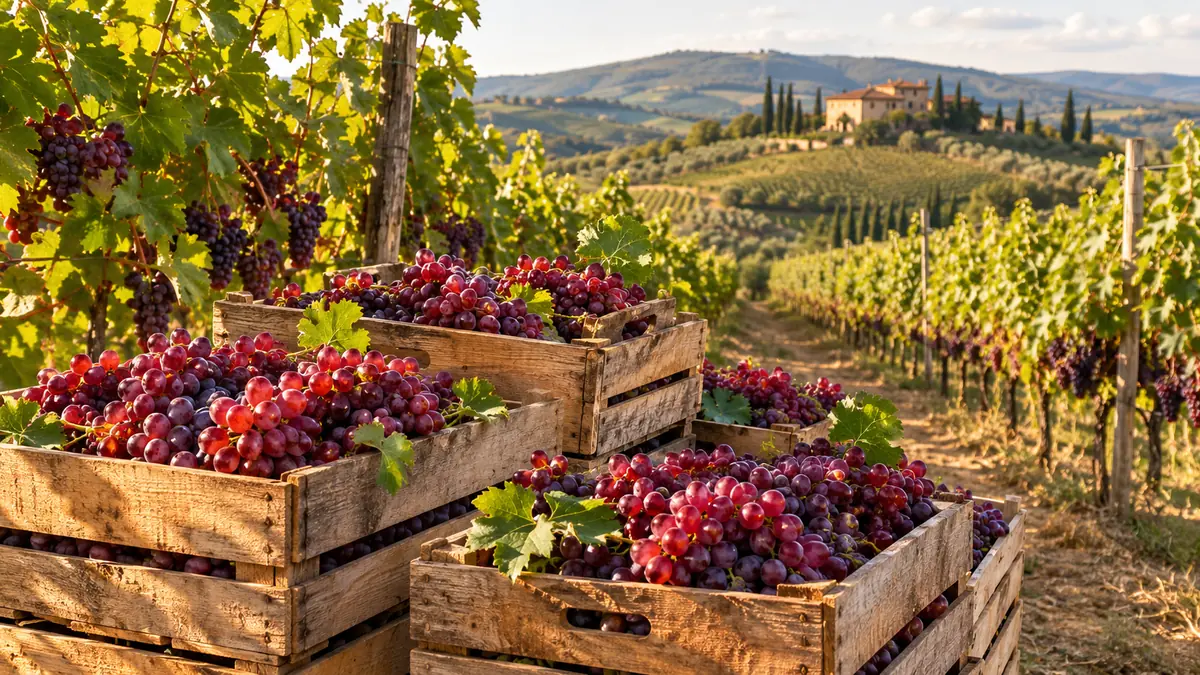
Sangiovese is usually picked from late September to early October. In 2023 the Chianti Classico harvest began around 20 September and ended in the first ten days of October.
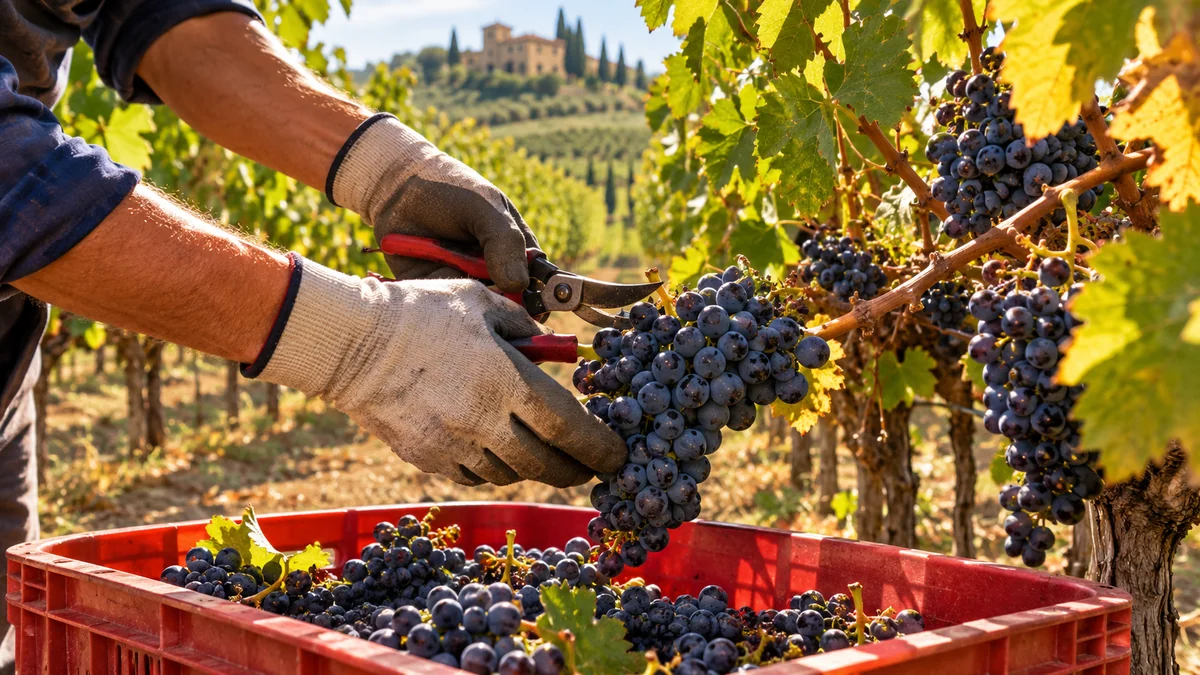
The date moves with the weather each year, so no tour can promise you will see picking. What you can count on in those weeks: tractors with red crates on the roads, the smell of fermenting must in the cellars, and winemakers with stained hands. Tours run as normal, and some estates show you the tanks working.
For this year's news, see the harvest wine tours post.
When should you not visit Tuscany for wine?
Mid-August is the hardest time: 32 degrees, peak crowds and some estates closed around the 15 August holiday. November brings the most rain.
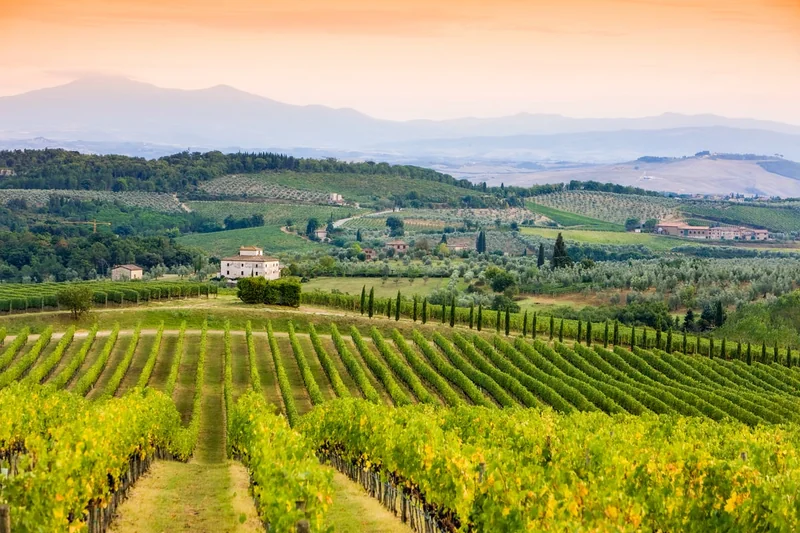
July and August average 32 degrees in Florence and the vineyards offer little shade. Tours still run and still sell out, but take a morning start, or the full day's afternoon option: it leaves Florence at 2:30 pm and visits two wineries with dinner among the vines. One guest on the evening start wrote: "By far the most stunning sunset views in the hills of Tuscany."
November is the wettest month, about 115 mm over ten days, and October is close behind. Rain does not stop a tour, since tastings are indoors, but it turns vineyard walks into mud. Bring closed shoes.
Too hot at midday? The full day has a 2:30 pm start with two wineries and dinner in the vineyards.
Explore the full day with lunch Tour detailsWhat wine events are there in Tuscany through the year?
Cantine Aperte at the end of May, the Expo del Chianti Classico in Greve on the second weekend of September, and Benvenuto Brunello in November.
| When | Event | What it is |
|---|---|---|
| Late May | Cantine Aperte | Open-cellar weekend across Tuscany (30 to 31 May in 2026), run by the Movimento Turismo del Vino |
| 2nd weekend of Sep | Expo del Chianti Classico | Producer tastings, some guided, in Greve's Piazza Matteotti, running since the 1970s |
| Late Sep to early Oct | Harvest | Not an event, but the busiest weeks in every cellar |
| November | Benvenuto Brunello | The Brunello consortium's presentation of the new release |
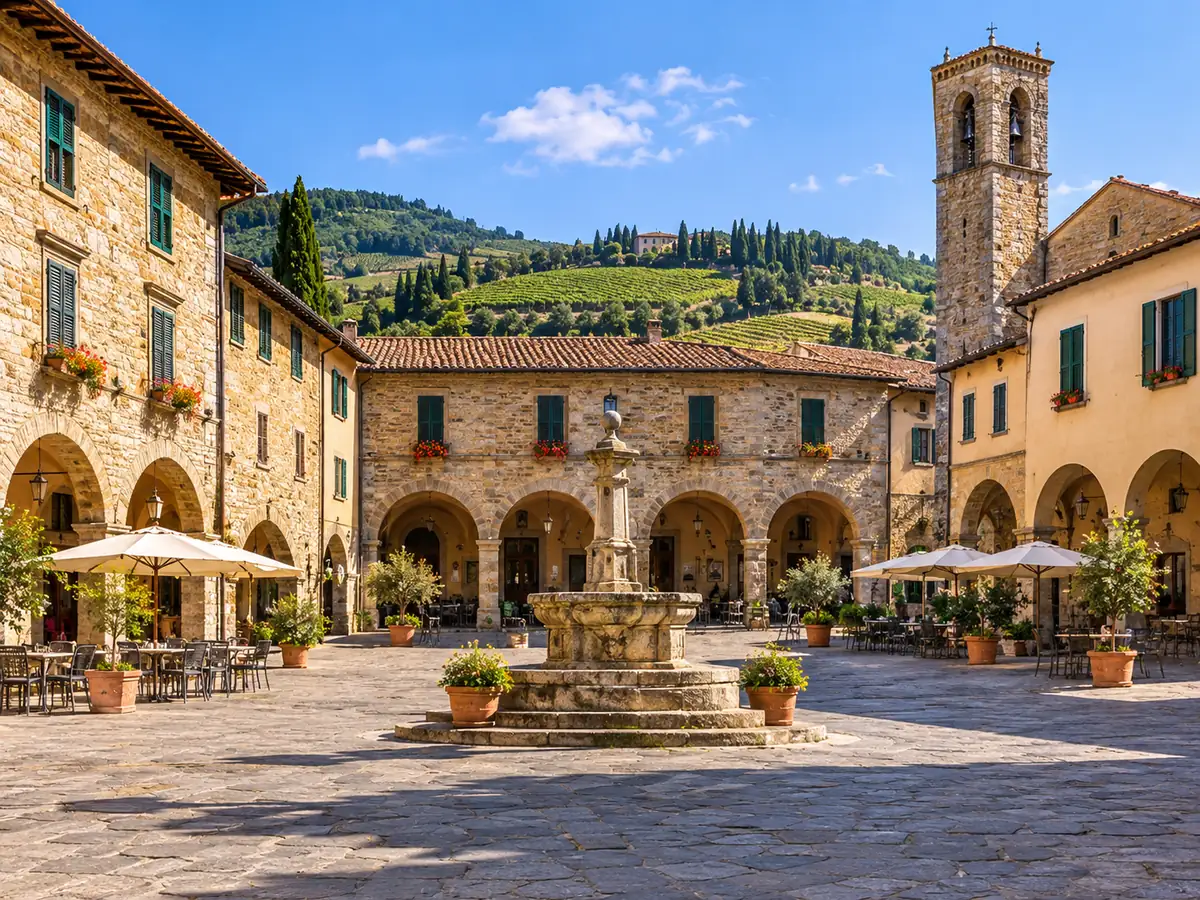
The Greve Expo is the one most visitors can join, with tastings in the square and concerts and exhibitions around them. Expect the village and the roads around it to be full that weekend, and book any Chianti tour well ahead.
Is spring a good time for a Tuscany wine tour?
Yes. April and May bring green vines, wildflowers and mild days of 20 to 24 degrees, with smaller crowds than autumn. Easter week is the exception.
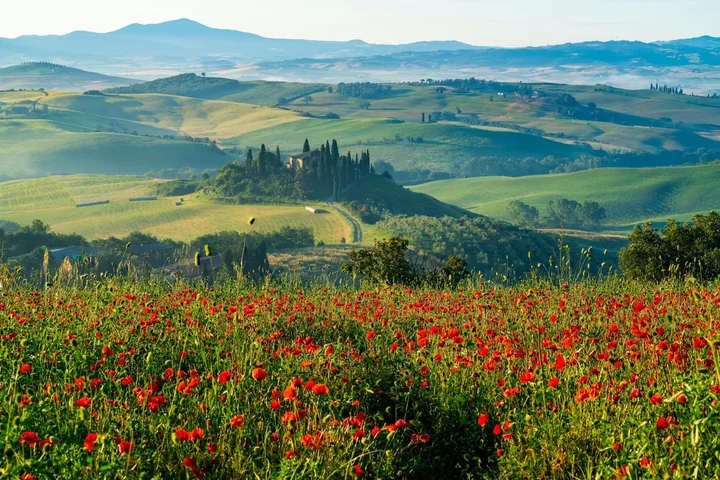
Spring is the season for the views. The vines are in fresh leaf, the poppies come out in the Val d'Orcia in May, and the light is clear. It suits the long Brunello day, when the towns are pleasant to walk and the coach is cool. April has the most rainy days of spring, so pack a layer.
Do wine tours run in winter?
Yes. The Florence tours run through the winter, the tastings are indoors and the groups are smaller. Expect bare vines, cold cellars and early sunsets.
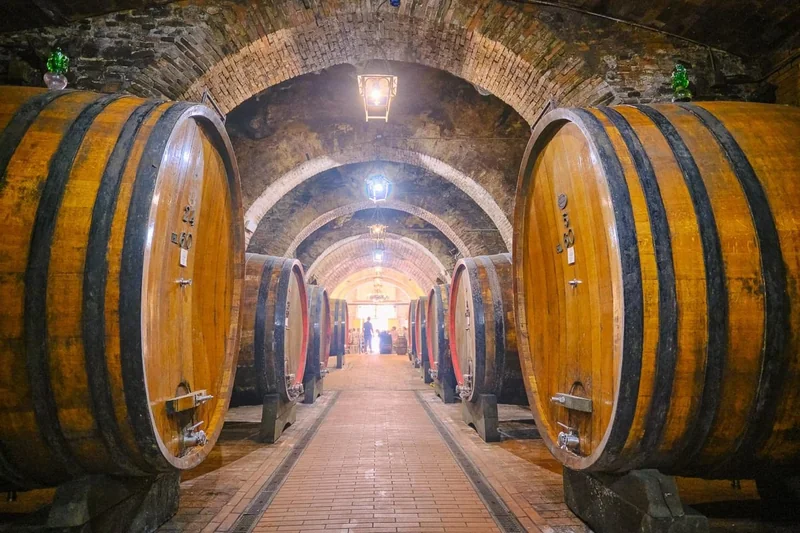
December to February averages 11 to 13 degrees by day and 2 to 3 at night. The vineyards are bare and being pruned, so the view is bigger than it is green. Inside, nothing changes: the barrels, the wines and the food are the same, and you get more of the guide's time. Bring a warm layer for the cellar.
If you book estates direct, check their winter opening days, and expect frost in the high villages. For what changes on each tour, see wine tours in winter.
What time of day is best for a wine tour?
Morning in summer and in late autumn, afternoon in spring and early autumn. The full day runs 9:00 to 17:00 with lunch, or 14:30 to 22:00 with dinner.
A tasting before lunch surprises some people, but it keeps you out of the summer heat. In spring and September an afternoon start is more relaxed, and the low sun on the vineyards is lovely. From November the days are short: guests on afternoon coach tours report reaching the last winery after dark, so pick a morning start if you want photos.
Eat breakfast. Six wines with cheese and salami is a lot on an empty stomach, and the minibus tour pours them across two estates in three hours.
Pick your start time when you book: 4.5 hours, two estates and six wines.
Check dates for the small-group Chianti tourFrequently asked questions
What is the rainy season in Tuscany?
October to December. November is the wettest month in Florence, about 115 mm over ten rainy days. July is the driest, with about three.
Is September too busy for wine tours?
It is the busiest month, with the harvest and the Expo in Greve. Tours still run every day; book a week or two ahead for the small-group tours.
Can I pick grapes on a harvest tour?
Standard tours do not include picking. In late September and early October you may see the harvest under way and the fermenting tanks in the cellar.
Is Tuscany worth visiting in winter for wine?
Yes, if you want quiet cellars and smaller groups. The vines are bare, but the tastings are indoors and the wines are the same.
Ready to book
Choose your tour
Free cancellation up to 24 hours before on every option. Prices are from-prices in USD and move with the season.
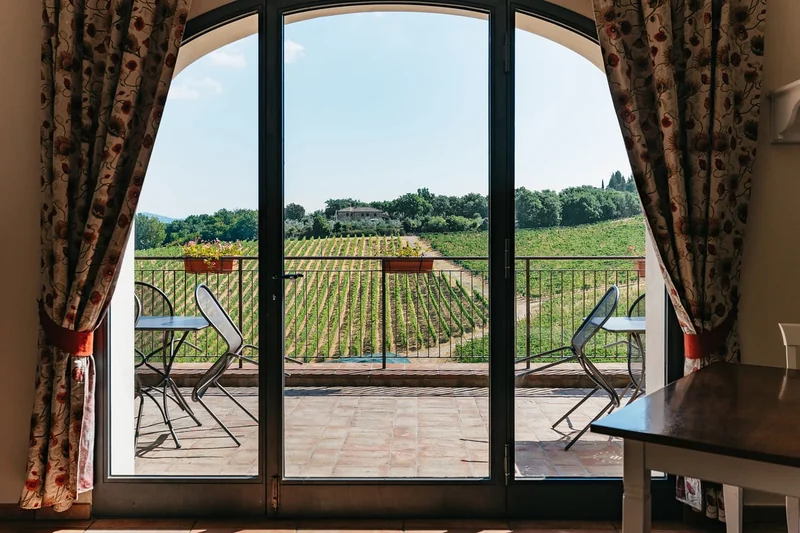
Small-Group Chianti Wine Tasting Tour
- Air-conditioned minibus from Piazzale Montelungo and back
- Driver-guide all day
- Guided visits to 2 wine estates in Chianti Classico
Full-Day Small-Group Wineries Tour with Lunch
- Air-conditioned vehicle with Wi-Fi
- English-speaking driver-guide
- Guided visits to 3 wineries with wine and olive oil tastings
Val d'Orcia Day with Brunello & Vino Nobile
Brunello in Montalcino and Vino Nobile in Montepulciano, one long day